The Rise of Student Freelancing
More students than ever are freelancing. Platforms like Malt, Fiverr, and Upwork have made it easy for anyone with a laptop to find gig work. For students at top schools, this seems like a no-brainer — earn money, build a portfolio, gain experience.
But freelancing has real downsides, especially for students juggling demanding coursework.
The Freelance Trap
Freelance work is fundamentally transactional. Clients buy hours or deliverables at the lowest price. For students, this means:
- Race to the bottom: Competing on price against a global pool of freelancers.
- No mentorship: Freelance clients rarely invest in your growth.
- Admin overhead: Invoicing, taxes, contracts — all on your shoulders.
- Unpredictable income: Feast or famine, with no stability.
Mission-Based Work: A Better Model
Mission-based work flips the script. Instead of selling hours, you're matched with a defined project that leverages your specific skills. The key differences:
- Structured scope: Clear deliverables, timelines, and expectations from day one.
- Fair compensation: Pay reflects the value of the work, not market-rate hourly bidding.
- Real experience: You work on meaningful business problems, not generic tasks.
- Legal simplicity: The platform handles contracts, compliance, and payments.
For Companies, Too
Companies benefit just as much. Instead of managing a freelancer relationship — writing briefs, reviewing hourly logs, chasing deliverables — they get a structured engagement with a vetted student who understands the mission.
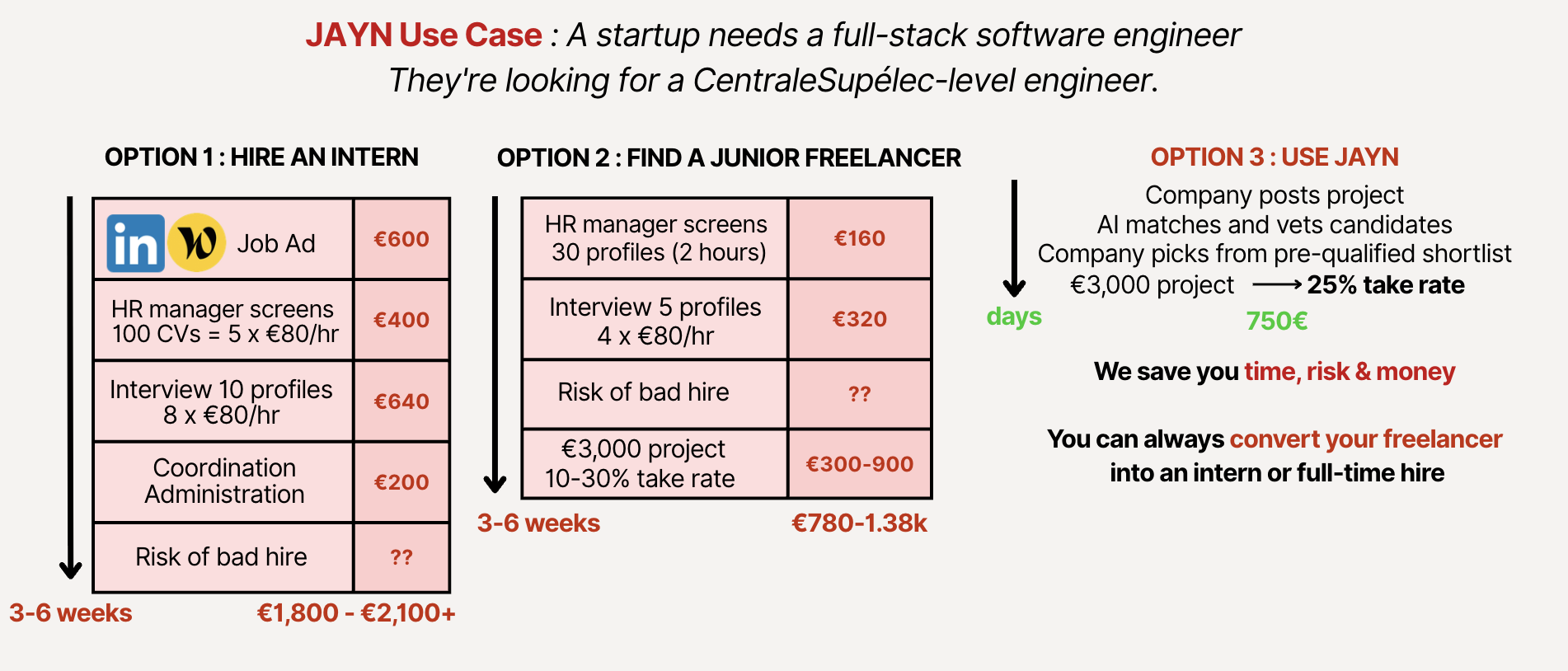
The result: better outcomes, faster delivery, and a talent pipeline that scales.
The Bottom Line
Freelancing has its place, but for students at elite schools and for companies seeking quality talent, mission-based work is the smarter model. It values expertise over availability, outcomes over hours, and quality over cost.